How to Run in Hot Weather: 10 Tips to Stay Cool and Safe
Written by Andy Hood, an ultra and endurance runner, Runna ambassador and cancer survivor who has run in everything from a North Devon heatwave to 35°C in the Alps and the fan-oven heat of Lanzarote.
Quick answer: To run safely in hot weather, run in the cooler early morning or evening, stick to shaded routes, wear light-coloured loose technical clothing and a wide-brimmed hat, hydrate with electrolytes before, during and after, cool yourself on the move by soaking a hat or bandana, slow your pace, and stop the moment you feel unwell. The single biggest gains come from when you run and what you wear.
Living in the UK, running in the heat isn't something I've had to think about too often. That said, recent years have definitely brought warmer, longer summers, and more of us are now facing hot runs that we simply didn't used to. I've also chased the heat around the world. My 2023 Tour du Mont Blanc, 160km with 10,000m of vert, was run in 35°C. I've logged a lot of miles in the scorching heat of Lanzarote too, where the black volcanic ground and relentless wind make it feel like running inside a fan oven.
I love the heat, I really do. But I've learned the hard way that it doesn't care how much you love it. Run badly in hot weather and it will humble you inside a mile or two. I shared a little image on Instagram recently that seemed to strike a chord, pairing the cheerful running emojis we all know, fresh and striding along, with the emojis we actually need on a hot week: faces like beetroots, tongues out, collapsed on the ground steaming gently. Every runner recognised that second row instantly, because we've all been there. The gap between those two rows is mostly down to a handful of decisions you make before you head out, and this guide is how to stay in the top row, whether you're heading out for an easy 5k or pushing through a long one. (If you'd like to use, share or repost that image, you're welcome to, it's over on my Instagram @runningwestwardho.)

Why running in the heat is so hard on your body
When it's hot, your body sends more blood to the skin to shed heat through sweat. That's blood diverted away from your working muscles, which is why your heart rate climbs, your perceived effort rockets and your pace drops, even on a run that would feel easy in cooler air. Sweat is your cooling system, but every drop is fluid and salt you have to replace. Get behind on that and overheating arrives fast. Understanding this is the foundation for everything below: in the heat, your job is to help your body cool, not fight it.
1. Run early or late and let the day do the hard work
This is the single biggest lever you have. The sun is at its most punishing roughly between 10am and 2pm, so the simplest win is to not be out in it. I always try to chase the cooler elements of the day, heading out at first light or waiting until the evening. You'll find cooler air, lower UV and a much friendlier "feels like" temperature. The difference is night and day, quite literally. Your heart rate sits lower, the effort feels honest, and you come home having actually enjoyed it rather than survived it.
2. Chase the shade, especially under trees
Where you run matters as much as when. A shaded route is a completely different run to an exposed one. Forests are my favourite for this, as the canopy blocks the direct sun, the air sits cooler under the trees, and there's often a little moisture in the ground that takes the edge off. Routes near water, lined with trees or in the shadow of buildings all help diffuse the heat.
It isn't always possible, mind. On the 2023 Mont Blanc run there were long stretches where shade simply didn't exist and the heat was relentless. When you can plan a loop that keeps you covered for the hottest sections, do it. When you can't, the rest of these tips matter even more.
3. Mind what colour you wear, the science is brutal
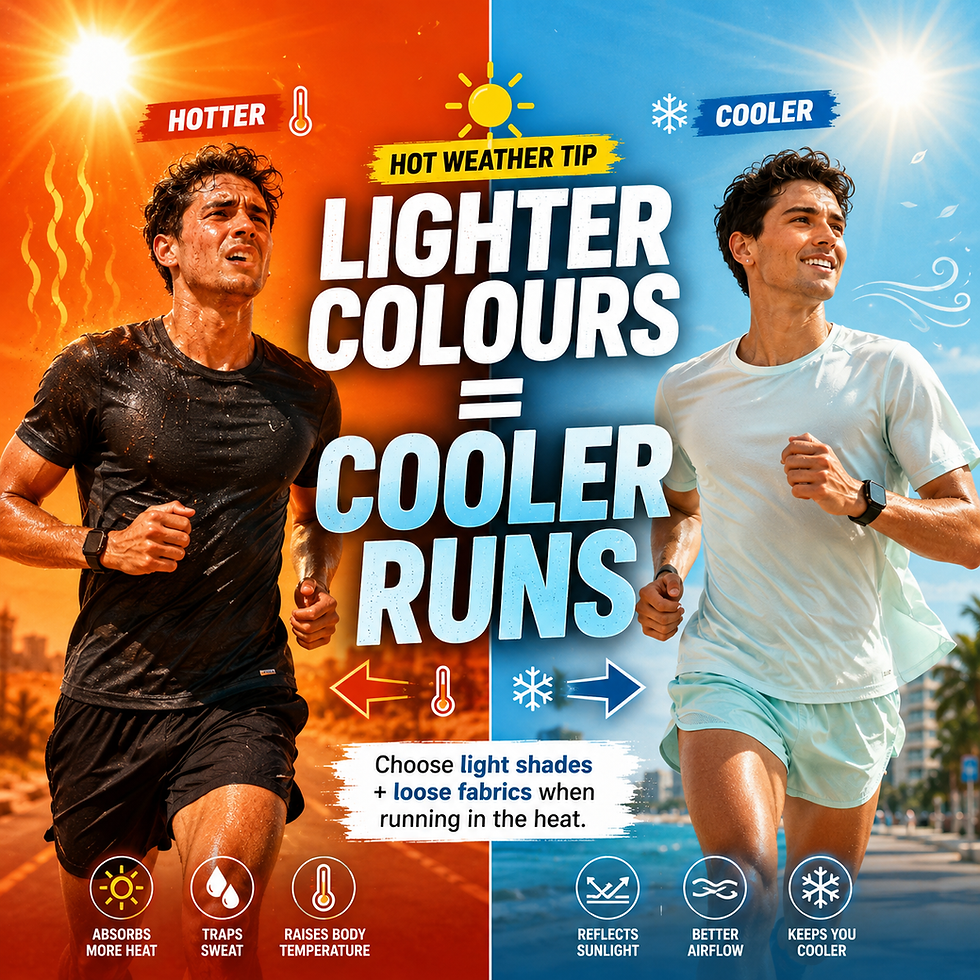
We all know dark clothes get hotter, but the gap is bigger than you'd think. When the National Weather Service in Kansas City laid shirts of different colours out in the sun, the dark ones reached surface temperatures around 20°F higher than the light ones, with black and maroon climbing past 150°F. Lab work backs it up. Studies in the Journal of Thermal Biology have found black T-shirts reaching surface temperatures 5 to 10°C higher than white ones under direct sunlight, while NASA material data shows dark colours absorbing up to 90% of sunlight versus just 10 to 20% for white.
So that smart all-black running kit you bought because it looks the part is quietly turning you into a radiator on a sunny day. Reach for white, pastels or anything light when the sun's out. It's the cheapest cooling upgrade you'll ever make.
4. Choose loose, technical fabric over tight cotton
Colour is only half the story. Fabric does the rest. You want lightweight, loose-fitting, moisture-wicking material such as polyester or a good technical blend, the kind that lets air move and sweat evaporate. Avoid cotton, which soaks up your sweat, hangs heavy and stops your body's own cooling system doing its job. Loose clothing lets air flow across the skin, which matters more than most people realise.
5. Wear a wide-brimmed hat and soak a bandana
A hat is non-negotiable for me in strong sun. On Mont Blanc I wore my wide-brimmed Salomon S/Lab Ultra hat every step to keep the sun off my face, and I'd soak a bandana at every opportunity, every river, every water fountain, and wear it around my neck. The neck sits close to major blood vessels, so cooling it brings your core temperature down quickly. A light-coloured, vented hat also lets heat escape from your head rather than trapping it. Pair it with sunglasses and you've taken a lot of the sting out of a bright route.
If you're racing or running in genuinely extreme heat, it's worth looking at a hat built for the job. The Compressport Ice Bob has an integrated pocket at the back of the head you can pack with ice cubes or a wet sponge, which sits right over your core cooling points and drips down as it melts. It's the sort of kit designed for the Marathon des Sables end of the spectrum, but the principle is exactly what I'm doing with a soaked bandana, just more cleverly.

6. Hydrate before, during and after
You can't cram hydration into the ten minutes before you leave. Drink steadily through the day, top up properly beforehand, and for anything over around 45 minutes, carry fluid with you. Additional fluids don't just keep you hydrated, they actively help cool you. In the heat you sweat more and that sweat is saltier, so plain water alone won't cut it on the longer efforts.
7. Replace electrolytes, not just water
This is the bit people forget. When you sweat hard you lose sodium and other electrolytes, and replacing only water can leave you flat, crampy and worse off. Use an electrolyte tab or mix in your bottle on hot, long runs, and don't be shy about salt in your meals either. Your legs will thank you when the cramps that usually arrive at mile eight simply don't. Getting your fluids and fuel right afterwards matters just as much, and I've covered that in detail in my guide to what to eat after a run.
8. Cool yourself down on the move
You don't have to wait until you're home to cool off. Splashing water over your head, the back of your neck and your wrists mid-run brings your core temperature down fast, because that's where the blood runs close to the surface. A wet cap, an ice bandana, or a quick stop at a tap or stream all work. It feels glorious and it genuinely helps.
9. Acclimatise gradually and drop your pace
Your body adapts to heat, but it takes time, usually somewhere around 10 to 14 days of consistent exposure. Don't expect your normal paces in the first week of a heatwave. Slow right down, run on effort rather than the watch, and let your heart rate guide you. There's no medal for a fast tempo run in 30°C, only a quicker route to feeling rotten. If the heat lands in the middle of a build for a big event, it's worth knowing how it fits the wider picture, something I touch on in my guide to training for your first 50K.
10. Know when to dial it back, and when to stop
When I don't have to be out there chasing the distance, I dial it right back on the hot days. I would much rather be in a position to run again tomorrow than spend it laid in bed with heat exhaustion. I've suffered that on a cycling trip in France and "unpleasant" doesn't come close.
The heat is the one condition where stubbornness really catches you out. Headaches, dizziness, nausea, chills or simply feeling "off" are not things to push through. Stop, get into the shade, take on fluid and walk it in if you need to. There is always another run tomorrow. And please keep an eye on friends and neighbours who struggle in the heat too.

What to wear running in hot weather
Pulling the kit advice together: choose a light colour over dark, a loose fit over tight, and technical wicking fabric over cotton. Add a light, wide-brimmed hat, sunglasses and sunscreen on any skin that's exposed. A bandana you can keep wetting is worth its weight in gold on a long, hot run.
Frequently asked questions
What is the best time of day to run in hot weather? Early morning, around first light, or later in the evening once the sun has dropped. Avoid the 10am to 2pm window when the sun and UV are strongest. Cooler air at these times keeps your heart rate and effort lower.
Should you wear dark or light clothes running in the heat? Light colours. Dark fabrics absorb far more sunlight, with black T-shirts reaching surface temperatures up to 5 to 10°C higher than white ones in direct sun. White and pastels reflect the sun and keep you cooler.
Do you need electrolytes when running in hot weather? Yes, for any hot run lasting longer than about 45 minutes. You lose sodium and other electrolytes through sweat, and replacing only water can leave you flat and prone to cramp. Use an electrolyte tab or mix and salt your meals.
How do you cool down quickly during a hot run? Pour or splash cool water over your head, neck and wrists, where blood runs close to the surface. A wet bandana around the neck, a soaked cap or an ice bandana all bring your core temperature down fast.
Is it safe to run in very hot weather? It can be, with the right precautions, but it carries real risk. Run in the cooler parts of the day, hydrate well, slow your pace and stop immediately if you feel dizzy, nauseous or unusually cold. When in doubt, leave it for another day.
Run smart, respect the sun, and a hot day can be one of the most enjoyable times to be out there.
Lace up, enjoy your miles, and be careful in the heat.

About the author
Andy Hood is an ultra and endurance runner based in rural North Devon, a Runna ambassador and a cancer survivor. He has raced from the half marathon up to multi-day mountain ultras, including the 160km Tour du Mont Blanc in 35°C, and trains regularly in the volcanic heat of Lanzarote. Andy writes openly about the highs and hard days of running and has raised over £27,000 for cancer charities. You can read more of his training guides, race reports and running ramblings at runningwestwardho.co.uk.
Article contains affiliate links/codes, I may receive a commission if you purchase products or services from the companies mentioned, at no cost to you. This goes towards running this blog, bringing you interesting articles and supporting may cancer charity fundraising with over £27,000 raised to date for cancer charities.
Comments