Abbott World Marathon Majors: The Complete Guide (2026)
The Abbott World Marathon Majors:
A Complete Guide to the World's Seven Greatest Marathons
From the courses and the crowds to how to actually get a place, everything you need to know about chasing the Seven Star medal, from an experienced ultra runner who has these very much on the list.
In This Article
What Are the Abbott World Marathon Majors?
If you've spent any time in the running world, you'll have heard the term 'World Marathon Majors', usually spoken with a certain reverence, as if simply mentioning them is enough to make your legs feel slightly inadequate.
The Abbott World Marathon Majors, officially sponsored by Abbott since 2015, are a series of seven of the largest, most prestigious, and most sought-after marathons on the planet. Seven cities, four continents, and a collective entry list that sees millions of runners applying each year for a relatively small number of places.
They are, in order through the calendar year: Tokyo, Boston, London, Sydney, Berlin, Chicago, and New York City.
Together they represent the absolute pinnacle of mass-participation marathon running. Not because the courses are necessarily the most technical or the scenery the most dramatic, though in some cases it genuinely is, but because of what they represent. History, scale, atmosphere, and the kind of crowds that genuinely make you run faster than you planned to.
As an ultra runner, I spend most of my time on trails and mountain routes, thinking in hours rather than miles per minute. But even from that perspective, the Majors command enormous respect. They are a different beast entirely, and a brilliant one.
Sydney is the newest addition, joining in 2025 to bring the series to seven. With Cape Town and Shanghai in the candidacy pipeline, the series may eventually grow to nine, but for now, seven is the number, and the Seven Star Finisher Medal is the goal.

The Seven Abbott World Marathon Majors
Here's what you need to know about each of the seven races, the course character, the atmosphere, and the key entry facts.
1. Tokyo Marathon 🇯🇵
Tokyo is the lone Asian member of the Majors and, for many runners, the most exotic destination on the list. Starting near the Tokyo Metropolitan Government Building in Shinjuku and finishing in the Marunouchi business district, the course takes runners through an astonishing cross-section of the city, temples, skyscrapers, imperial gardens, and neighbourhoods that feel entirely unlike anywhere else on earth.
Getting in is notoriously difficult. The general ballot accepts roughly 10–12% of applicants, with over 300,000 people applying for around 38,500 places. Options beyond the lottery include the ONE TOKYO GLOBAL membership programme (which gives international runners additional draw chances and a guaranteed entry after three consecutive unsuccessful attempts), charity places, and virtual challenge lotteries run throughout the year.
2. Boston Marathon 🇺🇸
Boston is unlike any other race in the world. Founded in 1897, it is the oldest annual marathon on earth and carries a weight of history that you genuinely feel from the moment you arrive in the city. The point-to-point course runs from Hopkinton to Boylston Street in downtown Boston, famously featuring the Heartbreak Hill climb in the Newton Hills, a cruel feature in the later miles that has broken many a carefully-laid plan.
The entry system is unique among the Majors: there is no open lottery. To enter the general field, you must have completed a certified marathon within the qualifying window and achieved a time at or under your age-group standard. Crucially, simply meeting the standard is rarely enough, in recent years the cutoff has been several minutes faster than the published standard due to overwhelming demand.
For 2026, the cutoff was 4 minutes and 34 seconds faster than the qualifying time.
The alternative is a charity place, which requires a significant fundraising commitment but is a reliable route in for those who don't yet have a qualifying time.
Boston is the one Major where your finishing time from another race earns you the right to stand on the start line. There is something genuinely special about that.
3. TCS London Marathon 🇬🇧
As a runner based in the UK, the London Marathon carries a particular weight. It is, by almost any measure, the most popular marathon ballot in the world, the 2026 edition attracted a world-record 1,133,813 applications for around 50,000 places, giving ballot odds of under 5%.
The course runs from Blackheath in south-east London to The Mall in front of Buckingham Palace, passing some of the most iconic landmarks in the world along the way, Tower Bridge, the Embankment, Canary Wharf, and the roar of the crowds on the final stretch down The Mall is the stuff of running legend.
Beyond the ballot, London offers several alternative entry routes: Good for Age places (based on time standards by age group), Championship places for faster club runners, and charity places through hundreds of registered charities. The London Marathon has raised over £1 billion for charity since its inception, more than any other sporting event in the world.
The official world record was secured at the 2026 London Marathon when Kenyan runner Sabastian Saw broke the 2 hour barrier with a time of 1 hour 59 minutes and 30 seconds.
4. TCS Sydney Marathon 🇦🇺
Sydney joined the Abbott World Marathon Majors in 2025, becoming the seventh race in the series and, initially at least, the most accessible. With a ballot acceptance rate of around 33%, compared to under 5% for London, it is the most forgiving entry point for runners beginning their Major journey. That said, over 123,000 applications arrived for the 2026 race, and the odds will only tighten as the race's Major status attracts growing global interest.
The marathon was originally established as a legacy event of the 2000 Sydney Olympics and has been running since 2001. The course is a genuine spectacle, taking in the Sydney Harbour Bridge, the Opera House, and sweeping harbour views that would make almost any finishing time feel worthwhile.
The Six Star Finisher Medal, awarded for completing the original six Majors, remains unchanged by Sydney's addition. A separate Seven Star medal is in development for those who complete all seven.
5. BMW Berlin Marathon 🇩🇪
Berlin is, by common consensus, the world's fastest marathon course. The combination of flat roads, cool late-September temperatures, and outstanding organisation has produced more marathon world records than any other race on earth. Eliud Kipchoge set his 2:01:09 world record here in 2022; the women's record also fell in Berlin.
The race began in 1974, when just 244 runners completed the course. It now fields over 54,000 runners through the historic streets of the German capital, passing through the Brandenburg Gate in a finish that is among the most iconic in sport. The ballot odds are roughly 20%, significantly better than Tokyo or London, and qualifying times provide an alternative faster-access route.
If running a personal best is part of your Major journey, Berlin is where you plan it.
6. Bank of America Chicago Marathon 🇺🇸
Chicago is the race that many runners describe as the most fun of the seven. The flat, loop course passes through 29 of the city's distinct neighbourhoods, each bringing its own character, its own crowd energy, and in some cases its own live music. Over a million spectators line the route each year, and the atmosphere is relentless from start to finish.
The course starts and finishes in Grant Park, with the downtown skyline as a backdrop, and it is consistently one of the fastest courses of the Majors, rivalling Berlin for PB potential. Ballot odds sit at around 25%, with charity and qualifying time options available.
7. TCS New York City Marathon 🇺🇸
New York City is, by any measure, the most epic marathon in the world. Over 55,000 runners cross the finish line in Central Park each year, the largest field of any marathon on earth. The course spans all five New York City boroughs, starting on the Verrazano-Narrows Bridge in Staten Island, sweeping through Brooklyn, Queens, and the Bronx, before finishing in the heart of Manhattan.
Over a million spectators line the route, a figure that genuinely sounds impossible until you're running it. The noise, the energy, and the sheer scale of the whole operation are unlike anything else in the sport.
Getting in is another matter. Ballot odds are under 3%, making it one of the hardest places to secure. The NYRR 9+1 programme offers a reliable alternative, complete nine qualifying NYRR races and volunteer at one event in a calendar year, and you earn a guaranteed entry for the following year's marathon. Charity places and qualifying times are also available.
New York is the one that finishes you, in every sense. It is the final race in the calendar year, often the final star collected, and the finish line in Central Park is one of those moments you spend years working toward.
Have you entered one of the Majors?
Tokyo
Boston
London
Sydney
The Six Star (and Seven Star) Finisher Medal

Complete all six original Abbott World Marathon Majors, Tokyo, Boston, London, Berlin, Chicago, and New York City, and you receive what many consider the Holy Grail of mass-participation running: the Six Star Finisher Medal.
Fewer than 20,000 runners in the world have earned it. Given that each race has ballot odds ranging from under 3% to around 20%, and that collecting all six typically takes anywhere from a few years to over a decade, the rarity is genuine.
With Sydney's addition in 2025, a Seven Star medal is now in development. Abbott has confirmed plans for an eventual Nine Star medal as the series potentially expands to include Cape Town and Shanghai, though timelines remain subject to those races completing the candidacy process.
The Six Star medal remains unchanged by Sydney's addition, runners who complete the original six will still receive it, regardless of Sydney. The Seven Star is a separate distinction for those who complete all seven current races.
The Six Star medal is awarded upon completing: Tokyo, Boston, London, Berlin, Chicago, New York
The Seven Star medal is awarded upon completing all seven including Sydney
There is no time limit, you can spread your Major journey over as many years as you like
Results must be registered through your Abbott World Marathon Majors runner portal
If you have already completed some Majors, claim those results through the portal and they count
How to Enter the World Marathon Majors
This is the part that trips most people up. Each race has its own entry system, its own timeline, and its own quirks, and missing an entry window can cost you a year. Here's a straightforward breakdown.
The Ballot / Lottery
Six of the seven Majors use a ballot or lottery system as the primary entry route. You apply during a specific window (usually open for a few weeks), pay nothing or a small admin fee, and then wait for results. If selected, you pay your entry fee and confirm your place. If not, you try again next year.
Ballot windows and approximate odds for each race: (organisers can change the ballot windows so please check latest information with each official race website.)
Tokyo — Ballot opens mid-August, ~10–12% odds
Boston — No ballot; qualifying time required (see below)
London — Ballot opens April under 5% odds (1.5% for 2026)
Sydney — Ballot opens late September, ~33% odds (most accessible)
Berlin — Ballot opens November, ~20% odds
Chicago — Drawing opens October/November, ~25% odds
New York — Ballot opens February, under 3% odds
Sign up for email alerts at the official race websites or through worldmarathonmajors.com to avoid missing opening dates, entry windows are often only two to four weeks long.

Boston: Qualifying Time
Boston is the exception. The only way into the general field is to have run a certified marathon within the qualifying window and achieved a time at or below your age-group standard, and in practice, several minutes below it. The cutoff for the 2026 race was 4 minutes 34 seconds faster than the published standard. If Boston is your goal, train for a significant PB first.
Good for Age & Championship Places
London, Berlin, and Chicago all offer Good for Age or Championship entry for runners who meet specific time standards. These are faster-track entries that bypass the ballot, if you have the legs for it, they're worth pursuing.
Charity Places
Every Major offers charity entry, and for most runners, this is the most reliable alternative to the ballot. You commit to raising a minimum amount for an official charity partner and in return receive a guaranteed race entry. Minimums vary by race and charity, but typically range from £1,500–£3,000 for London to $2,500–$5,000 for New York.
If you're going to run the race anyway, raising that money for a cause you care about adds a whole additional dimension to the experience.
The Abbott WMM Six Star Journey Draw
If you have completed five of the original six Majors and are chasing your final star, there is a specific Six Star Journey Draw available through the Abbott WMM portal that gives eligible runners an additional chance to secure entry to their remaining race. Worth checking if you're close to completing the set.
Tour Operator Packages
For every Major, official and third-party tour operators offer guaranteed entry as part of a travel package. These cost significantly more than a standard ballot entry, but for runners who value certainty over cost, they remove the lottery element entirely.

Why Push Yourself to Complete All Seven?
It's a fair question. Seven marathons, across four continents, likely spread over several years, with entry that ranges from difficult to borderline improbable. Why bother?
The honest answer is: because very few things in running, or in life, combine challenge, travel, community, and genuine achievement quite like this does.
Each Race Teaches You Something Different
Tokyo teaches you about precision, culture, and the extraordinary experience of being a foreign runner welcomed into a city that takes its marathon seriously. Boston teaches you about earning your place, there is no substitute for the feeling of starting that race knowing you ran your way onto the start line. London wraps you in 45 years of history and a crowd that simply refuses to let you slow down. Berlin is a lesson in what a fast, flat course and cool conditions can do to your finishing time. Chicago is pure atmosphere. New York is something else entirely.
Each one adds something to your running life that you couldn't get from a local race. They are, genuinely, transformative experiences.
The Community
There is a global community of runners pursuing the Six and Seven Star medals, and it is one of the most welcoming, generous, and genuinely supportive communities in sport. Facebook groups, runner portals, shared training advice, and the simple camaraderie of people who understand exactly why you're spending significant money to fly to Tokyo and run 26.2 miles around it.
A Goal That Scales With Your Running Life
Most runners don't complete the Majors in two or three years. It takes time, sometimes a decade or more, which means the goal grows with you. Your marathon training evolves, your race experience deepens, and by the time you cross that final finish line, you're a very different runner to the one who started the journey.
I haven't run any of the Majors yet, my focus has been on ultras. But they are very much on the list. And from everything I've seen and heard from runners who have chased the Six Star, it is a journey worth every difficult ballot, every training block, and every mile.
The Finish Line in Central Park
There has to be a destination worthy of the journey. Few things in sport match the feeling of crossing the finish line of your seventh Major, knowing what it took to get there. That is the kind of finish line worth running toward.
Training for a World Marathon Major
Whether this is your first marathon or your sixth, training for a World Major deserves proper preparation. These aren't races to wing, not because the distances are unusual (26.2 miles is 26.2 miles wherever you run it) but because you've invested too much to get to the start line to leave your preparation to chance.
Build Your Base First
If you're targeting your first Major, give yourself at least 16–20 weeks of structured training. If you're relatively new to marathon running, 24 weeks is better. The goal is to arrive at the start line fit, rested, and confident, not merely hoping you've done enough.
Run Variety, Not Just Miles
Effective marathon training isn't just logging miles. It includes easy runs (the backbone of your aerobic base), long runs (building the specific endurance the distance demands), tempo runs (raising your lactate threshold), and interval sessions (improving speed and running economy). The balance across all four is what builds a well-rounded marathon runner.

Pacing Strategy
For World Majors specifically, start conservatively. The crowd energy, the occasion, and the sheer excitement of race morning will all conspire to push you out faster than planned. Resist. The runners who negative-split, running the second half faster than the first, are the ones who truly enjoy the experience. At Berlin or Chicago, where conditions favour fast times, this discipline pays off in the final miles when others are struggling.
Fuelling and Gear
Never use a World Major as an experiment. Every gel, every piece of kit, every drink from the aid stations should have been tested in training. Know what your stomach tolerates at marathon pace. Know what your feet need. These races are not the place to try something new.
Allow Recovery Between Majors
If you're chasing multiple Majors in a calendar year — say, London in April and Chicago in October, plan your recovery and build-up carefully. Six months between marathons is enough for a full training cycle, but only if you recover properly from the first race. Don't rush back into heavy training; the weeks after a marathon are as important as the weeks before.
Getting There: Why a Sports Tour Operator Makes the Whole Thing Easier
Let's be honest about something. Running a World Marathon Major isn't just a training challenge, it's a logistical one. You're travelling to major cities during some of the biggest sporting weekends of the year, trying to navigate race expos, unfamiliar transport networks, hotel bookings in peak demand, and the small matter of preparing to run 26.2 miles, all at once.
That's exactly where a specialist sports tour operator earns its place. And when it comes to the World Marathon Majors specifically, Sports Tours International is the one that keeps coming up, and for good reason.
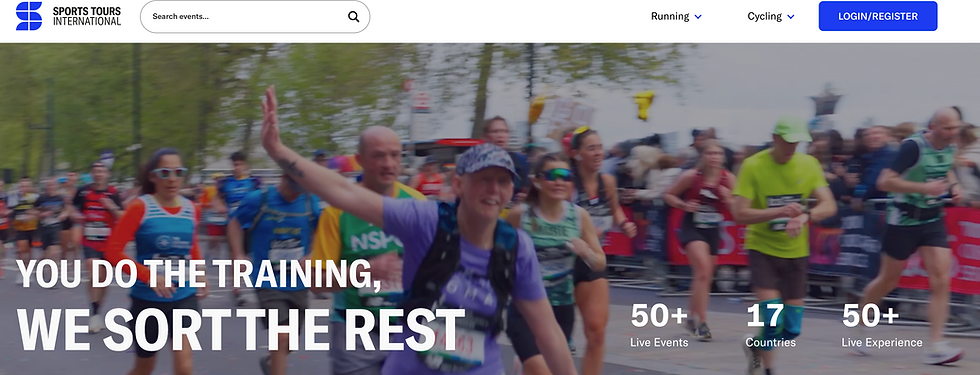
Who Are Sports Tours International?
Sports Tours International has been taking runners to the world's greatest races since 1973, over 50 years of experience that shows in every detail of how their trips are put together. They were founded by Vince Regan, an ex-international marathon runner who was directly involved in the creation of the London Marathon, which gives you some idea of the depth of knowledge and passion that sits behind the operation.
They are the number one sports tour operator for the London, Berlin, and Sydney marathons, and offer packages for Chicago, New York, Tokyo, and Boston. Each year they take thousands of runners to these cities, and they've helped hundreds of runners complete their Six Star Finisher journey.
For most of the Majors, Sports Tours International packages include guaranteed race entry, meaning no ballot, no qualifying time, and no anxious wait for results. You book the trip, you get the bib.
What's Included in a Package?
This is where it gets genuinely compelling. A Sports Tours International Major package isn't just a flight-and-hotel arrangement with a race bib attached. It's a properly managed race week experience, built around the needs of runners:
Guaranteed race entry for most Majors — no ballot or qualifying time required
Centrally located accommodation, chosen specifically for its proximity to the start line, expo, and race route
Guided shakeout runs in the days before the race — perfect for loosening the legs and getting to know your surroundings
Pre-race briefings with tips on the course, conditions, pacing, and what to expect on race day
An experienced team of running-savvy reps on the ground throughout the trip, available to support all runners
Social events during race week — creating a genuine sense of community among runners who are all there for the same reason
Post-race celebrations to mark the achievement properly
Sightseeing tours so you actually get to experience the city you've travelled to

For Tokyo, for example, the package includes a full-day city tour, an evening walking tour through some of Tokyo's most extraordinary neighbourhoods, a shakeout run from the hotel, a pre-race dinner with course tips, and a welcome reception, all wrapped around a prime hotel that's a walkable distance from the start. That's a very different experience to booking a budget hotel on the other side of the city and figuring it out on your own.
The Value of Running With Other Runners
One of the things that gets overlooked when people compare package costs to DIY travel is this: you're not just buying logistics. You're buying community.
Arriving in a city like New York or Tokyo for a Major as a solo runner can feel isolating. The city is enormous, the race weekend is overwhelming, and unless you know people already, race morning can feel oddly lonely for what is supposed to be one of the most exciting days of your running life.
Travelling with Sports Tours International puts you in the company of runners who are there for exactly the same reason you are. The shakeout runs become easy conversation. The pre-race dinner becomes a proper occasion. The post-race celebration, when everyone is limping happily and comparing experiences — is the kind of thing that turns a race into a memory.
For runners chasing the Six or Seven Star medal over multiple years, many of the same faces show up at different Majors. The community that forms around that shared pursuit is one of the sport's genuinely special things.
Is It Worth the Cost?
Package prices are higher than booking everything separately, that's simply the nature of a managed, full-service trip. But the calculation is more nuanced than it looks. For most of the Majors, guaranteed entry through a package removes the need to spend years waiting for a successful ballot, which, depending on the race, could otherwise cost you three, five, or ten attempts. Factor in the peace of mind, the expert logistics, and the quality of the race week experience, and for many runners the package represents genuinely good value.
For runners who are time-poor, less experienced with international travel, or simply want to focus entirely on the race rather than the admin, a Sports Tours International package is one of the smartest decisions you can make on your Major journey.
👉 Visit sportstoursinternational.com to browse packages for each of the seven Abbott World Marathon Majors.
Want a Structured Training Plan for Your Major? Try Runna
One of the most common things I hear from runners preparing for their first World Major is a version of: 'I know I need a proper plan, but I don't know where to start.' It's exactly why I recommend, and am now an ambassador for, the Runna app.

Runna builds personalised marathon training plans that include exactly the variety a Major demands: easy runs, long runs, tempo sessions, and interval work, each with a clear purpose, sequenced properly, and adapted to your current fitness and target race.
Every run comes with audio coaching that talks you through the session as you run, and after each effort you get feedback on what went well and where there's room to improve.
It's the closest thing to having a coach in your ear, without the coaching fees. And for runners targeting a World Major, where the margin between a good day and a great one often comes down to the quality of preparation, that kind of structure genuinely makes a difference.
As a Runna Ambassador, I can double the standard one-week free trial to a full two weeks, completely free, with access to all Premium features. That's enough time to set up a personalised plan, get a feel for how Runna structures your training, and run enough sessions to know whether it works for you.
Runna works seamlessly with all major smartwatch brands, Garmin, Apple Watch, Suunto, and Coros, so whatever's on your wrist, you're covered.
👉 https://web.runna.com/redeem?code=ANDY2 — 2-week free trial, all Premium features included

Final Thoughts
The Abbott World Marathon Majors are, without question, some of the greatest experiences in running. Seven cities, four continents, millions of spectators, and a shared pursuit that connects runners from every corner of the world.
They are not easy to enter. They are not cheap to complete. And collecting all seven will take most runners the better part of a decade. But that is, in many ways, the point. The best goals are the ones that ask something of you, not just on race day, but in the months and years of training, applying, failing ballots, trying again, and eventually standing on the start line of a race you've spent years working toward.
Whether you're targeting your first Major or hunting down your final star, the journey itself is the thing worth running for.
The start line of a World Major is one of the most electric places in sport. Everything you've done to earn your place there will make sense the moment that gun goes off.

Abbott World Marathon Majors Frequently Asked Questions
About the Author
Ultra runner, cancer survivor, and firm believer that the best goals are the ones that take years to reach. I've completed events from self-organised 50Ks to the Tour du Mont Blanc, raised over £25,000 for cancer charities, and have the Abbott World Marathon Majors firmly on my radar for what comes next. I write about long-distance running, resilience, and why going further is almost always worth it.
Comments